
Global Health
24 September 2026
Augustin Lambert: Creating a toolkit for decolonising global health education in the Nordic context
Spotlight
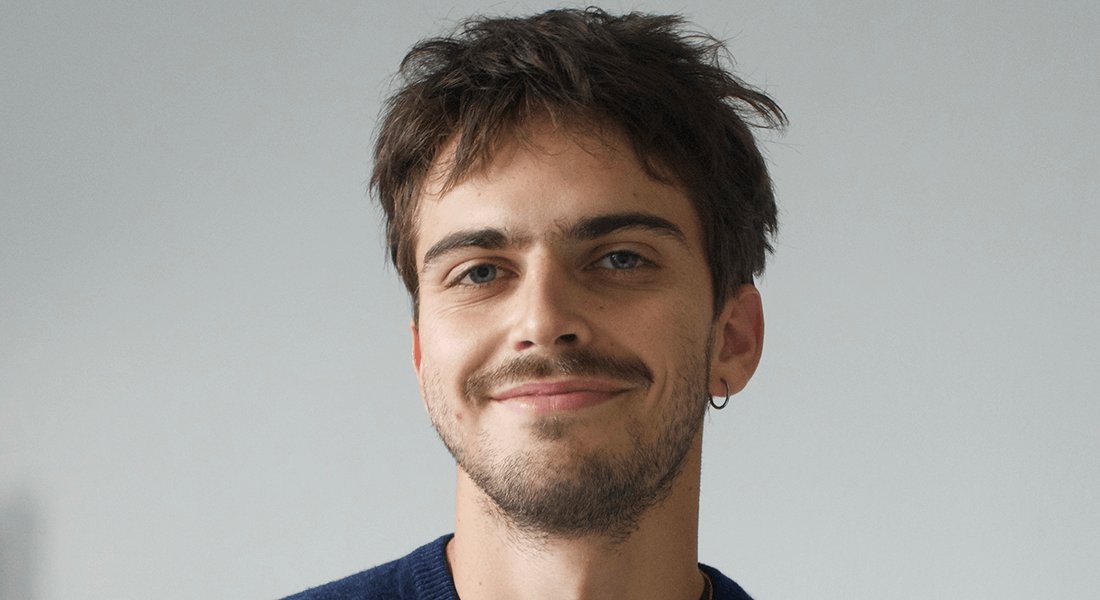
Meet Augustin Lambert, a Research Intern at the School of Global Health, University of Copenhagen. “Whose knowledge is represented when Nordic universities teach global health?” In answering this question, Augustin is working on a collaborative project exploring how to bring decolonised perspectives into the Nordic global health curricula in the form of a toolkit.
Tell us about your research
I currently work as a Research Intern where I support a NordPlus collaborative project on decolonising global health education. The project brings together academics from universities across the Nordic countries to develop a practical toolkit for integrating decolonial perspectives into Nordic global health curricula.
I am a recent graduate of the MSc. Global Health here at the University, with a focus on mental health, disaster risk management and urban health policies. During my studies, I had the chance to talk to people who confronted my worldviews and assumptions regarding health in many ways. I also joined the student organisation Eye on Global Health, which was already working on decolonisation at the time, and it sparked my desire to move beyond just “knowing” about the topic to being more active in it.
Why is this research important?
This matters because global health education shapes professional practice in global health. The ideas, assumptions and methods students encounter influence how they perceive the world, define problems, design interventions, and understand global partnerships in global health.
A more reflexive and decolonial approach to global health education will help to prepare professionals to contribute in their future careers while being aware of the inherent dynamics at stake.
However, the project is not only concerned with merely changing course content. It also examines methods, reflexivity, power dynamics, representation and the assumptions reflecting how global health is taught. The overall goal remains to ensure that the toolkit is both practical and attentive to the network’s own positionality and blind spots in their approach to writing this toolkit. This includes asking whose knowledge is represented, how perspectives and voices from the Global Majority are incorporated, and how this is relevant for the Nordic context.
The project is also important because it aims to produce something concrete and usable. Rather than remaining at the level of abstract discussion, this project contains three journal clubs aimed at sparking discussions around the existing literature/toolkits, positionality and pedagogical methods needed to carry out this project adequately. In return, the Journal Clubs will generate shared principles, reflections on representation and positionality vis-à-vis the Global Majority, and methodological guidance that will inform an April 2027 workshop in Copenhagen and the creation of a final toolkit.
What excites you about your work and your research?
What excites me most is that the project doesn't treat decolonisation in a silo, trying to reproduce the long line of already existing toolkits and projects out there. I appreciate the efforts of this network to acknowledge the fast-changing nature of the debate and research, and to recognise the need for a toolkit that acknowledges both what has been done before and what can be done as a Nordic university for its students, staff, and institution as a whole. As a young Global Health researcher concerned with the future of my profession, I appreciate the reflexivity put into this project from various Nordic voices to rethink their own view and involvement in this project in order to avoid a paradoxical “colonial” approach to decolonise education.
I also enjoy the interdisciplinary and international nature of the collaboration. The project involves academics with different backgrounds in global health, education, public health and the social sciences. Working across institutions and national contexts means that people bring different assumptions and experiences to the discussion. Although potentially challenging, it reflects the need for variety in such a project, as it can only succeed as a co-created project. The project has also encouraged me to look beyond the most frequently cited international literature and examine examples closer to home. Considering Nordic contexts such as Sápmi and Kalaallit Nunaat is important because decolonisation should not be treated as an issue that exists only elsewhere in faraway lands. It requires reflection on the histories, institutions and relationships within our own regions as well, which have suffered from Nordic colonial histories.
What is your favorite source of global health knowledge?
Personally, my favourite source of knowledge for global health information and decolonisation comes from a selection of books and articles inspired by conversations with friends. One good source for centralised knowledge is the Decolonization Library from the Copenhagen Decolonization Collective who was born here at the University of Copenhagen. They have indexed many great books, articles and resources relevant to the conversation, which are divided into multiple themes. Another good source of knowledge for relevant global health education remains the Lancet Global Health and the Journal of Medical Humanities, with many different scientific articles relevant to both global health and decolonisation in general.
Interested in knowing more about the Nordic Network on Global Health?
Visit their website here.
Contact
Augustin Lambert
Research Intern, Global Health Section, Department of Public Health, University of Copenhagen
lambertaugustin06@gmail.com