
Spotlight
8 June 2026
Alexandra Blackwell: Building evidence for mental health and violence prevention among displaced youth
Spotlight
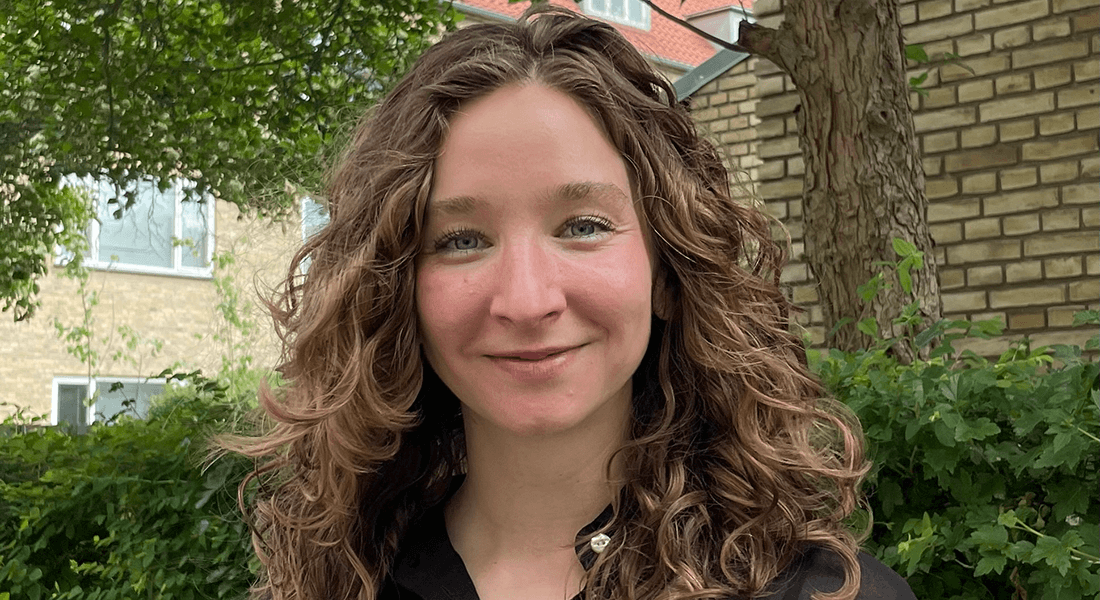
Researcher Spotlight: Meet Alexandra Blackwell, a postdoctoral researcher at the Global Health Section, Department of Public Health, University of Copenhagen. In this spotlight, Alexandra talks about how we can prevent violence and promote mental health among people whose lives have been shaped by conflict and displacement, especially young people.
Tell us about your research
My research examines how we can prevent violence and promote mental health among people whose lives have been shaped by conflict and displacement, especially young people. After more than a decade working in research in humanitarian action, I am convinced that lasting change comes from solutions that are locally driven and meet people where they are.
In practice, my work spans across the full cycle of intervention research: understanding the risks that make people vulnerable and the protective factors that help them thrive, designing and evaluating interventions through mixed-methods implementation science, and co-creating research and interventions with the communities and practitioners who live and work in these settings. Currently, I am doing this through a randomized controlled trial of Stronger Together, a family-systemic mental health intervention supporting forcibly displaced and socioeconomically marginalized families living in Amman, Jordan, which I work on here at the University of Copenhagen and in collaboration with War Child Jordan, SOS Children’s Villages Jordan, and University of Amsterdam.
Why is this research important?
Complex crises have become the new normal. Conflict is unfolding at multiple levels across the world, climate change is generating overlapping distress, and poverty and inequality continue to deepen. More children and communities than ever are living through adversity that shapes their health and futures. If we want young people to grow up and reach their full potential, we have to interrupt the intergenerational cycles of trauma that conflict and displacement leave behind. My research is ultimately about working alongside families and communities to build and test evidence-based ways to help young people not just survive these crises, but thrive beyond them.
What excites you about your work and your research?
Collaboration is the part I love most. Some of my most rewarding work has been alongside frontline providers, listening to the people who understand a context best, and making sure the research serves them and the families they work with. Working together, sharing and validating both methods and findings, is central to how I think global health research should be done.
In my heart, I am also a problem-solver. How do you answer a complex question, in a complex setting, where the usual research methods simply don’t fit? That puzzle is exactly what keeps me going.
Where do you see yourself in 10 years?
The landscape is shifting quickly, but I hope to keep building an academic career in partnership with collaborators around the world. I am increasingly struck by how similar the drivers of youth wellbeing are across very different settings, from humanitarian emergencies to Denmark and the United States, and I would like to connect those strands of my work, in the belief that shared drivers can point us toward shared solutions.
What advice do you have for junior researchers in global health?
Ask for help. It is something I am still practicing myself, but I have learned that you only grow by being willing to admit what you don’t yet know. If you spend your career believing you should have all the answers, you will miss the chance to learn from the brilliant people around you.
What is your favourite source of global health inspiration and/or knowledge?
My peers! I have learned more from the friends and colleagues beside me than from any single article, course, or instructor. They remain a constant source of support, inspiration, and guidance.
Contact
Alexandra Blackwell
Postdoctoral Researcher, Global Health Section, Department of Public Health, University of Copenhagen, alexandra.blackwell@sund.ku.dk