
Case challenge
8 September 2026
New Copenhagen audio walk explores power, colonialism and health
Global Health
How have histories of power and colonialism shaped how we understand health today? That’s the question behind the Power, Colonialism and Health Walk, a new Copenhagen walking tour launched by the University of Copenhagen's School of Global Health.
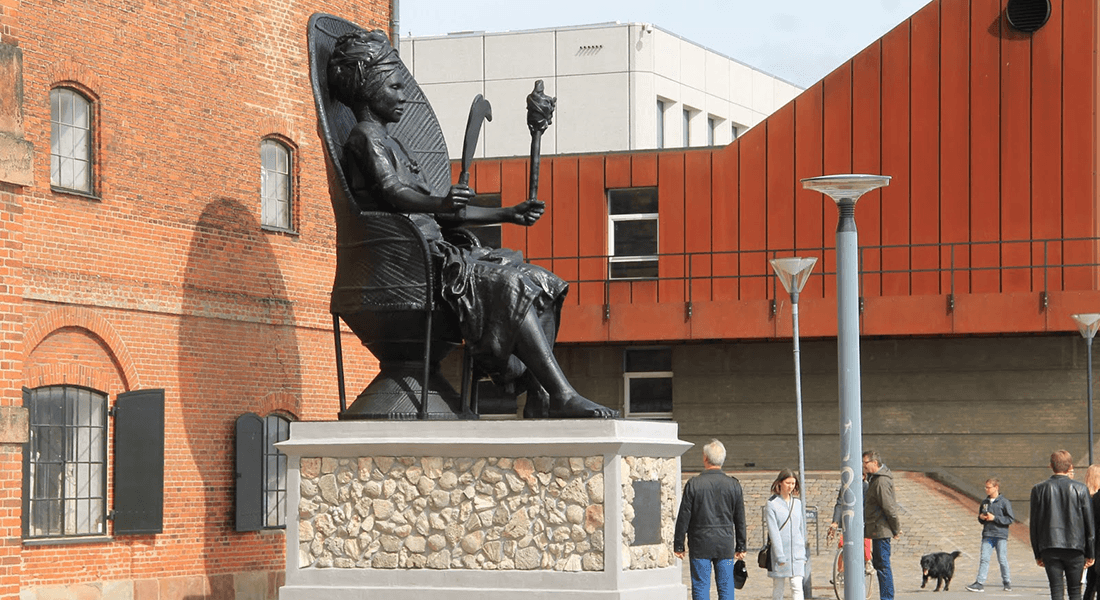
Health systems are often presented as neutral, designed to measure disease, identify needs, and provide care. Yet the categories, standards, and forms of knowledge that underpin them are shaped by history and social assumptions. In Copenhagen, these histories can be traced through the city’s streets, institutions, and collections, from sites connected to medicine and public health to the University of Copenhagen and Denmark’s colonial past.
The Power, Colonialism and Health Walk invites participants to explore these histories through a critical global health lens. It examines how colonial systems of power shaped not only political and economic relations, but also the ways people, bodies, diseases, and knowledge have been understood and classified, and how these legacies continue to influence health and healthcare today.
Developed by the School of Global Health, the walk takes learning beyond the classroom and into the city itself.

The city as a living archive
Copenhagen’s streets are more than a scenic collection of architecture; they serve as a physical ledger of who built institutions, accumulated wealth, and dictated the definition of progress.
Modern medicine did not develop outside systems of power. The same practices of measuring, classifying and producing knowledge that advanced scientific knowledge could also be used to define which bodies were considered normal, which populations were considered vulnerable, and whose knowledge was treated as legitimate.
From past practices to present questions
At each stop, the walk connects historical places and practices with questions that remain relevant today:
- Who produces knowledge about health?
- Whose evidence counts?
- Who gets to define a health crisis?
- Who has the authority to decide what the solution should be?
- And what becomes possible when we stop treating the present as neutral?
The walk also explores the difficult relationship between care and control. It demonstrates that colonialism is not a closed chapter, but an ongoing history whose structural influences continue to inform contemporary health policies and institutions.
How to take the walk
The Power, Colonialism and Health Walk is freely available as a self-guided audio tour on StoryHunt, allowing visitors to explore the route at their own pace. Whether you are a student, healthcare professional, researcher, or curious traveler, the walk offers a powerful new perspective on some of Copenhagen’s most familiar landmarks.
Find the walk on Story Hunt here.
Walk the history. Challenge the present. Enjoy the walk.
If you are interested in more health walks, we can also recommend the Copenhagen Datawalk – an audiowalk exploring the hidden data that shape urban health and wellbeing. Find it here.
The School of Global Health would like to acknowledge and thank Xenia Klerk Kurpatow for her significant contribution to the development of the Power, Colonialism and Health Walk.