
INNOVATION
7 September 2026
Students address menstrual health challenges in Kibera at the SDG Innovation Challenge 2026
Case challenge
Through collaboration, creativity, and design thinking, 40 students from different universities came together at the University of Copenhagen's SDG Innovation Challenge 2026 to explore solutions for menstrual health challenges in Kibera, Africa's largest informal settlement.
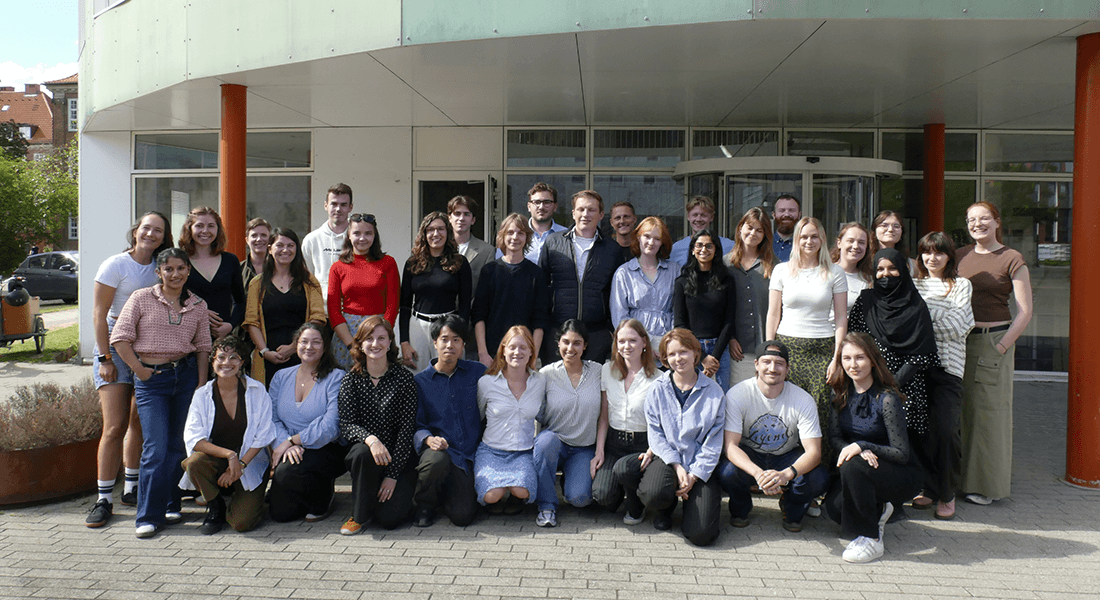
Poverty, overcrowding, and limited access to water and sanitation can make managing menstruation particularly challenging in Kibera, Nairobi. Affordability, lack of privacy, stigma, and limited access to information create additional barriers for many girls and women. Developed by 100% for the Children in Denmark and Kenya, this year's SDG Innovation Challenge case invited students to look beyond the distribution of menstrual health products and develop solutions that address the realities of everyday life for women and girls in Kibera.
From 20 to 24 August, 40 international students worked in interdisciplinary teams to develop innovative responses to the challenge. Guided by an innovation consultant from UCPH Lighthouse, expert insights, and hands-on prototyping, they transformed ideas into practical solutions. By combining diverse perspectives, the students explored how their ideas could be sustainable, locally relevant, and responsive to community needs.
The teams presented their final solutions to an expert jury on the final day, where the three strongest proposals were recognised for their outstanding contributions. The winning team earned the opportunity to travel to Geneva to present their idea at the Sustainability Olympiad, an international SDG case competition taking place from 6 to 9 November. There, the students will further develop and showcase their solution while connecting with international organisations and fellow student innovators working to advance the Sustainable Development Goals. Read more about the Sustainability Olympiad here.
The winners
🥇 1st place – Team 2: Girls4girls “Pad service”
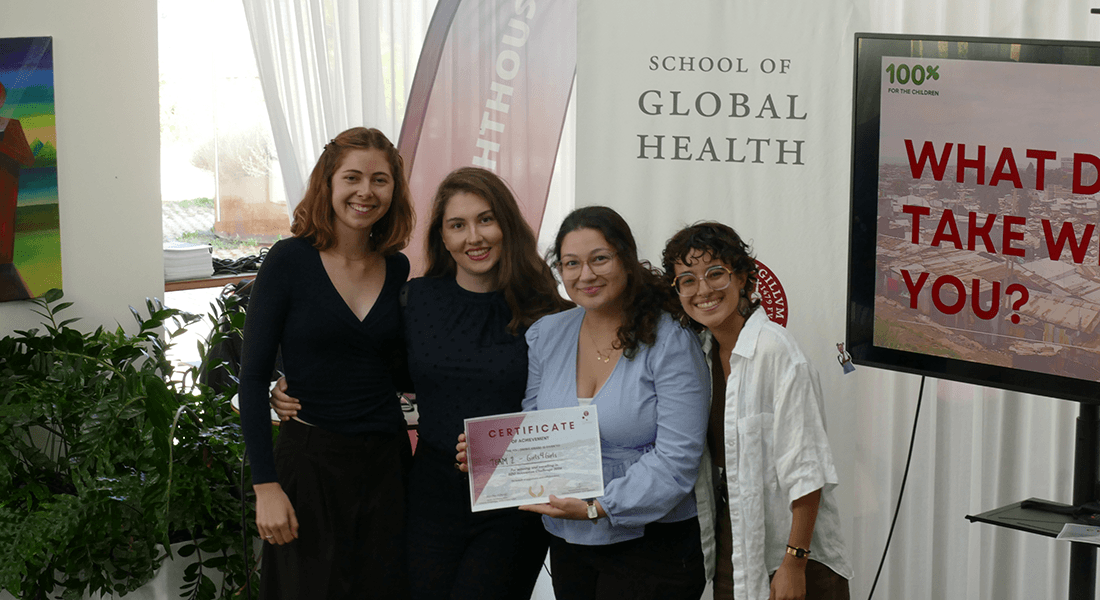
The winning team tackled a simple but critical question: How can reusable pads be washed and dried safely and privately at school? Their low-cost laundry system combines discreet collection, low-water washing and rooftop drying, with the community involved in shaping how it works. The aim is to make reusable pads safe, practical and sustainable while reducing stigma, health risks and school absence.
Team members: Alba Grau Torres (University of Copenhagen), Isabela Kurohiji de Morais (University of Copenhagen), Johanna Wassum (Heidelberg University), Margarita Karaivanova (Heidelberg University).
See the team present their solution here.
🥈 2nd place: Team 8 - KiberaNet “Connecting data, driving change”
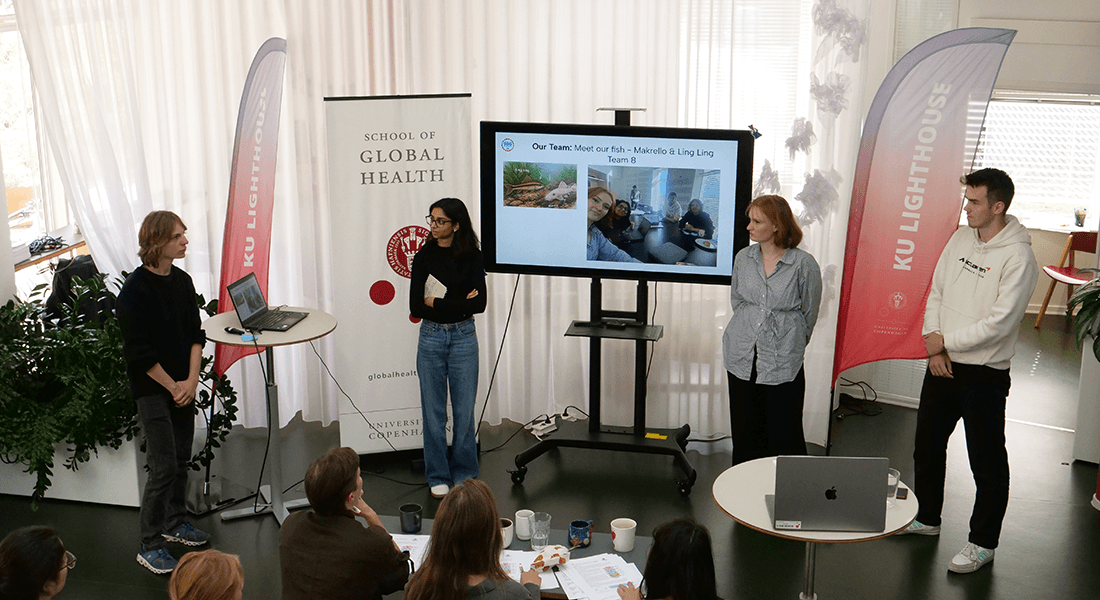
What if better data could help connect the people already working to improve menstrual health? KiberaNet proposes a community-driven platform linking NGOs, local leaders and communities through shared data. By mapping water points, toilets, washing facilities, health centres and other infrastructure, it reveals gaps and helps direct resources where they are most needed. Its feedback loop turns community knowledge into coordinated action, with Lindi proposed as the first pilot area.
Team members: Jona Schnirch (Heidelberg University), Sakhi Dhagat (Aarhus University), Malin Dreessen (Heidelberg University), Lukáš Vomastek (Charles University)
See the team present their solution here.
🥉 3rd place – Team 6: Mavipesa “Turning waste into health”
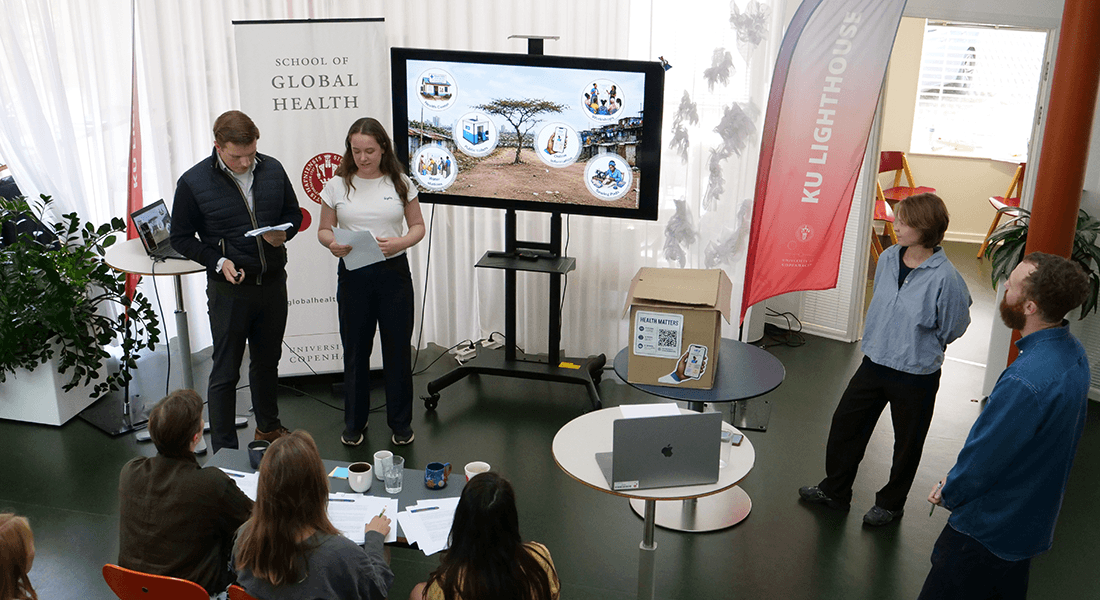
Mavipesa asks us to rethink sanitation: What if waste could become a resource? Their community-based circular sanitation system uses separation toilets to safely collect waste and recover it as energy, fertiliser or cement. Participating households earn Mavipesa tokens, which can be exchanged for products such as water-purification equipment, reusable menstrual pads and sanitation supplies. In doing so, the model connects health, sanitation, sustainability and local value in one circular system.
Team members: Pauline Lozac'hmeur (Sorbonne University and ENSCI), Anna Sophie Waters (Heidelberg University), Maximillian Behmer (Heidelberg University).
See the team present their solution here.
The SDG Innovation Challenge is hosted by UCPH Lighthouse and the School of Global Health. It is supported by 4EU+ University Alliance.
If you are interested in global health student innovation, then read about the opportunities here.